The heated shouts pierced the stairwell of the apartment block like shattering glass. „What is wrong with you this time?! How much more can I take?! I’m sick of it all!” The woman’s voice carried through the thin walls, ringing across the entire floor in Kraków.
Zuzanna and Mateusz paused mid-step on the stairs, frozen as if an unseen force had slammed into them. Their eyes met for a heartbeatno words passed between them. In that silent exchange, they read each other’s thoughts clearly: it was time to leave. They exhaled together, turned, and slipped quietly away from the building. Neither planned to return home that night.
Who would choose an evening trapped in endless parental battles? Not them. The twins walked with purpose toward the next entrance, where their grandmother Elżbieta lived. Her flat had become their refuge in recent months. Weekend visits had shifted to near-nightly stays, a quiet escape from the chaos.
Life in their parents’ home had grown unbearable. Michał and Agnieszka Kowalski argued relentlessly, forgetting everything else, and now they dragged the children into the fray more often. Agnieszka would whirl toward Zuzanna, demanding, „Tell me I’m rightyou agree, don’t you?” Michał would cut in before any reply, turning to Mateusz: „No, I’m the one who’s rightback me up!”
The twins stayed silent. They refused to pick sides or fuel the endless war. All they craved was peace, quiet, and warmththe kind they found with babcia.
These clashes repeated daily, grinding like an old mechanism no one could halt. The twins had learned the warning signs: a sharp tone, abrupt gestures, the way their parents exchanged loaded glances. Those cues meant it was time to slip out. What child wants to exist in constant dread, where any talk could explode into a screaming match?
They still couldn’t grasp what had ignited the disaster two years earlier. Their family had never been perfect, but once, their parents could resolve differences. Arguments happened, yet they ended in measured talks over tea, not raised voices. Now, everything had flipped. A mug left on the table sparked long lectures on carelessness and disrespect. A shirt on the wrong hook became ammunition for cutting remarks about order. A spoon in the sink turned into an accusation worthy of endless dissection.
One evening, Zuzanna sat in babcia’s kitchen, stirring her tea without focus. She watched the amber swirls in her cup before blurting out with raw pain, „How did it get this way, babcia? Everything shifted after their trip together. What really happened there?”
Elżbieta set her own cup down and gently touched her granddaughter’s hand. She had her own suspicions about the rift, but they brought no comfort. „The grown-ups will sort it out,” she said softly, her voice steady despite the weight. „Sometimes people need space to figure out the right path.”
Zuzanna nodded, but doubt clouded her eyes. She sensed babcia was holding back, yet she didn’t push. What use was it, when they still saw her as too young for the truth?
„We can’t stand the yelling anymore!” Mateusz burst out, his voice cracking with frustration. „We can’t even finish homework or read in peace! I don’t remember the last time we sat down together as a family. If they can’t handle being together, they should just split upeveryone would breathe easier!”
The words hung heavy, carrying the truth of months of strain. Mateusz spoke for both of them; he knew Zuzanna felt the same exhaustion. Their home had lost all calmeither Agnieszka snapped or Michał fired back with irritation, and the clash trapped them with nowhere to hide.
„Mateusz…” Elżbieta faltered. She set aside her knitting, studied him closely, and shook her head slowly. „Have you thought about what happens if they divorce? You’d be divided. Are you ready to live apart from Zuzanna?”
„We’ll stay with you!” Zuzanna cut in, her gaze pleading. „We’re here almost every night anyway. You wouldn’t mind, would you?”
Elżbieta went still. She understood their painshe saw the fatigue etched in their faces, the way endless fights had worn them down. On one side, the children would be safe here, surrounded by calm where they could study without interruptions and feel protected. She loved them fiercely and would give them that shelter gladly.
On the other, what about their parents? How could she explain that the kids no longer wanted to live at home? Would Michał and Agnieszka even agree? And if they did, how would it reshape their bond with the twins? Might this choice sever ties completely?
„Let’s not rush,” she said at last, drawing a deep breath. „You know you’re always welcome. But first, let’s try talking to your mother and father. Maybe together we can find a way to mend things.”
„Don’t worry, we’ll speak to them ourselves,” Zuzanna declared with a sudden smile, relief flickering through her. Babcia was nearly on their sidethat mattered most. „Just don’t say no! We truly can’t stay there anymore. They’d be better off apartotherwise, one day they’ll really hurt each other. I saw dad raise his hand at mom yesterday… He didn’t strike, I swear! But he was right on the edge.”
She fell quiet, the memory flooding back. She had gone to the kitchen for water and stood frozen in the doorway: Michał half-turned toward Agnieszka, his arm snapping upward as her mother instinctively ducked. A second later he lowered it, but that instant had stretched into an eternity for Zuzanna.
„Babcia, please agree!” Mateusz urged, stepping closer and gripping her hand as if afraid she’d pull away. „We’ll help with everything around the house. Just don’t send us back. They barely notice us! Yesterday I told dad about the parent meeting. Know what he said? 'Ask your mother!’ So I did. Guess what she told me?”
„Go ask your father?” Elżbieta guessed quietly, already knowing.
„Exactly!” Mateusz gave a bitter laugh. „Then they argued for two hours over who would go. Shouting across the rooms from different spots. I just stood there listening.”
„I asked them to sign the form for the museum trip,” Zuzanna added, eyes downcast as her fingers twisted her sleeve. „Now I’m the only one in class who won’t go. Neither signed it. Instead they fought againmom yelling it was dad’s job, dad insisting it was hers.”
Elżbieta watched them, seeing the deep weariness in their eyesnot the fleeting tiredness of a bad day, but the kind built over months of tension replacing warmth, indifference replacing support.
„It’s always like this,” Mateusz sighed, shoulders slumping. His voice carried the exhaustion of repetition. „Any request from us sparks another fight. We don’t even want to come home. A couple nights ago we got in at elevenand did they scold us? No. Just sent us to bed without asking where we’d been. Later they blamed each other for failing to raise us properly.”
The twins sighed in unison again. Lately they had seriously weighed divorce as the only escape. Yet the thought of separation terrified themwho would live with whom? One with Agnieszka, the other with Michał, their tight bond reduced to occasional weekend visits.
They had whispered options in their room at night. Once Mateusz joked about running away, grabbing packs and vanishing. He smiled to lighten the mood, but Zuzanna took it seriously. Her eyes lit briefly before she murmured, „What if we really left? Even for a few days…” In that moment they both realized the home had become so toxic that escape no longer felt impossible.
Then the idea struck: babcia! Why not move in with her? The thought hit them together. Zuzanna voiced it first: „Let’s ask babcia if we can live here. She won’t shout or fight. We won’t have to hear those endless arguments…” Mateusz jumped in: „Yes! She’s kind, always there for us. Her place is big enough.”
They pictured the new lifequiet breakfasts, peaceful studying, evenings playing games with babcia. No shouting, no accusations, no need to hide in their room. For the first time in ages, hope stirred in their chests. Let their parents sort their own mess; the twins would finally find rest…
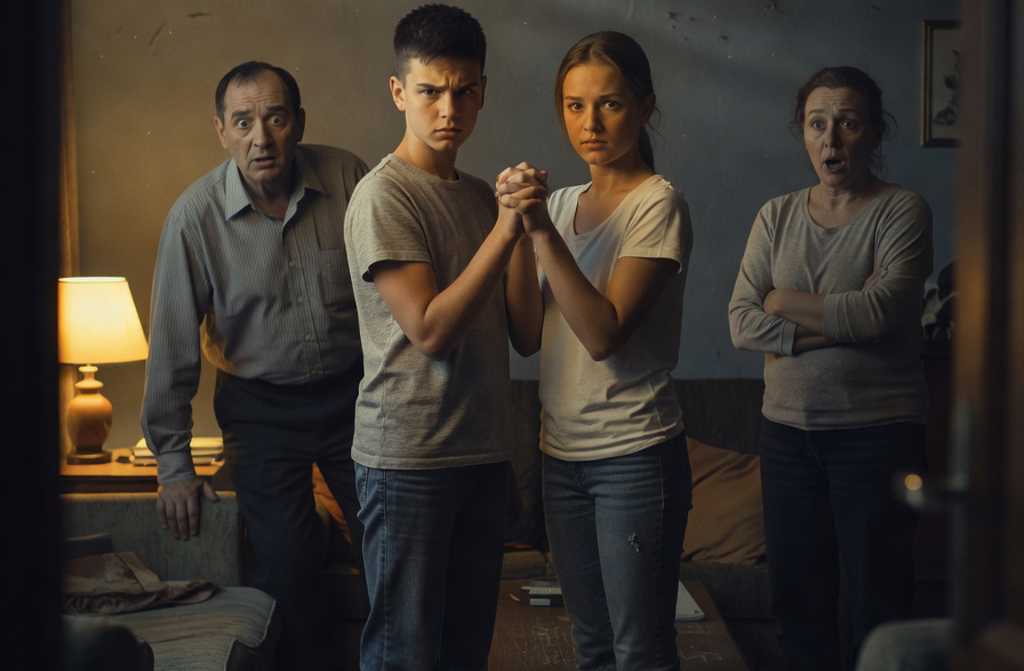
„Mom, dad, we need to talk,” the twins said firmly, standing in the living room. They had waited for an evening when both were home and stepped in with resolve. Zuzanna clutched Mateusz’s hand tightly for strength. „But first, promise you’ll hear us out completely before saying anything.”
Michał looked up from his phone, startled. Agnieszka, sorting items on the sofa, straightened abruptly. Their faces showed pure disbelief at the children’s words.
„This is your doing!” she snapped, folding her arms. „The kids are already giving us orderslike we answer to them!”
„And who are you to talk!” Michał shot back, tossing his phone aside. „I’m always at work, providing for everyone. You’ve been home with them all along! What have you taught them? Why are they the ones dictating now?”
The twins exchanged glances. They had braced for thisthe talk veering straight into blame. But they couldn’t back down.
„Enough!” Zuzanna cried, her voice trembling despite her effort to stay calm. She stepped forward. „Mateusz and I have decidedyou two need to divorce.”
Silence crashed over the room. Agnieszka stood with her mouth open; Michał rose slowly from the sofa.
„Well, this is something!” her voice turned dangerous. „Zuzanna, you’re still a childyou don’t tell adults how to live! And what else have you 'decided’? Maybe split the flat for us too?”
„If you don’t divorce, we’ll go to social services,” Mateusz said, squeezing his sister’s hand. His tone was steady, though doubt churned inside him. „Dad, you could lose your job at the firm. They don’t tolerate scandals thereyou’ve said it yourself. Reputation is everything.”
„And you, mom,” Zuzanna continued, meeting her eyes directly, „the neighbors will lose all respect. They won’t even speak to you! Everyone already hears the fightswe can add details.”
„They’re threatening us! Look at them!” Agnieszka finally managed, glancing between her children. „These are our kids! How can you do this to us?”
„We’re not threatening,” Mateusz said quietly but firmly. „We just want you to see it can’t go on like this. We’re exhaustedfrom the shouting, from you ignoring us, from every little request turning into a war.”
„You’ll divorce and move apart, and we’ll live with babcia,” they finished together, as if practiced. „It’s better for everyone: peace for us, no more fights for you. We won’t be caught in the middle anymore.”
Their parents stared, stunned into silence for the first time. Normally they would interrupt and accuse, but now both seemed struck dumb. Their thirteen-year-old twins stood hand in hand, facing them with unexpected resolve, speaking of matters the adults had avoided.
Michał and Agnieszka had considered divorce themselves. But one question always stopped them: who would take the children? Separating the twins felt unthinkablethey were inseparable, always together, always supporting each other. The parents couldn’t imagine splitting them into different homes, limited to weekend glimpses.
The idea of Elżbieta taking them had never crossed their minds before, lost as they were in their own grudges. Now, hearing it from the children, both wondered if this could be the solution. Babcia adored them, her flat was spacious, she welcomed them always… Perhaps this could ease at least some of the strain.
„I’ll call my mother,” Michał muttered through clenched teeth. The words came hard.
He didn’t finish. Agnieszka cut in, her voice heavy with a fatigue that surprised even her: „Then we’ll finally stop torturing each other. Call her. I’ll be glad not to see your face every day.”
The words lingered. She hadn’t meant to sound so harsh, but years of built-up hurt had forced them out.
„And I’ll be thrilled!” Michał replied, masking his pain with a bitter edge. No real angerjust weary irony at what their marriage had become. He pulled out his phone and dialed slowly. As the rings sounded, both looked away, avoiding each other’s gaze. They didn’t know where this would lead, but a line had likely been crossed…
That day, the Kowalski family made a turning point decision. It began with Michał’s long talk with his mother. Elżbieta listened without interrupting, asking only a few clarifying questions now and then.
When he finished, a pause fell. Babcia sighed deeply and said, „If you both believe this is best for the children, I agree. They’ll be safe hereI’ll look after them.”
By evening, the parents met in the kitchen for the first time in ages without raised voices or accusations. They sat across from each other and went over the details. Step by step, they reached the same conclusion: divorce was the only sensible path. The twins would move to Elżbieta’s, and the parents would send monthly support in złoty for their care.
No one planned to abandon the children. Both swore to visit on weekendsbut on separate days to limit contact. „I’ll come Saturday mornings and take them out,” Michał said wearily. Agnieszka nodded. „You’ll come Sunday. That keeps it simple. The main thing is they don’t feel left behind.”
Their goal was to minimize contact and prevent new clashes. They promised not to badmouth each other around the kids, not to pull them into sides, not to argue in their presence.
„We’re still their parents,” Michał said. „We have to stay that way, even if we’re no longer married.”
As time showed, the choice worked. The children finally relaxed and lived like typical teenagers. Zuzanna joined an art groupshe had wanted to for years but never had the peace before. Mateusz started football and made new friends on the team. They spent time together again: walking the city streets, catching films, talking about school without fearing an explosion at any moment.
Stability returned to their studies too. They had a quiet space for work now, free from shouts and fights. Homework got done calmly, and grades improved quickly. Teachers noticed: „You’ve become so focused, you twokeep it up!”
Life settled into a new rhythmnot flawless, but steady and predictable. The twins stopped hiding in their room, stopped flinching at loud voices, stopped worrying over every move. They simply lived, finding strength in the hardest times…
Five years later, the Kowalski family’s days flowed quietly. Zuzanna and Mateusz had grown used to the pattern: studies, clubs, friends, warm evenings with babcia. Their parents still visited on alternating days, bringing gifts and attention but no old conflicts. Over the years they had learned to speak politely, without the old bursts of anger.
The first real meeting between the former spouses came at the twins’ graduation. The school held a formal evening, and both parents attended. They started on edge, sitting apart in the hall, but the ice slowly melted.
When dancing began, Michał approached Agnieszka: „Want to dance? For old times.”
She hesitated, then nodded.
Afterward they sat in the school courtyard for hours, watching graduates laugh by the fountain. The talk flowed naturallyfirst about the children, then the past. They spoke civilly, recalling good moments from their marriage rather than old wounds. The twins watched from afar and felt a mix of joy and ache. It hurt to see their closest people treat each other like enemies.
But the calm shattered the next day. Michał and Agnieszka invited the children to a café. Over tea, they took each other’s hands, and Michał announced with a broad smile, „Kids, we’ve thought it over and decided to remarry. These years showed us our feelings never faded. We still love each other and want our family back.”
His voice rang with joy, as if sharing the best news possible. Agnieszka beamed, expecting delight.
The twins locked eyestheir expressions darkened instantly. Doubt flashed in Zuzanna’s gaze; Mateusz clenched his fists beneath the table. The same mistake again! What were their parents thinking? Could they truly live together without the old storms?
„You’re serious?” Zuzanna managed.
„Completely,” Michał replied confidently. „We’ve both changed. Learned to listen. We want to give our family another chance.”
The children stayed quiet. Conflicting emotions churned inside: hope that their parents had truly shifted, alongside fear of repeating the old pain.
They didn’t argue against it, though. They offered no comment at all, which wounded their parents deeply. Agnieszka looked at them, confused: „Aren’t you happy? We thought you’d be thrilled for us.”
The twins just glanced at each other and shrugged. What could they say? „Don’t do thisdon’t ruin your lives”? The words stuck. They didn’t want to seem cold, but they couldn’t pretend everything was fine either.
The rest of the visit felt strained. Their parents shared plans; the twins nodded politely, minds elsewhere. On the way home, Zuzanna whispered to her brother, „I hope they know what they’re doing.”
Mateusz only sighed in reply…
„So, we’re heading to Warsaw?” Zuzanna opened her laptop, ready to check university sites. „Far from all this madness. I can already picture how this circus ends.”
„Of course we are,” Mateusz said firmly, his voice carrying a maturity beyond his years. He ran a hand through his hair, trying to shake off the weight of recent months. „They’ll manage peacefully for a month, maybe two at most. Then it starts again: shouting, slamming doors, accusations… I won’t be their hostage anymore. I won’t wake up every morning wondering what mood they’re in and who’ll face the next wave of complaints.”
He stood and paced, absently gathering scattered books. One thought looped in his mind: why did the adults, who should model wisdom and steadiness, act like volatile teenagers? Why repeat the same mistakes instead of fixing problems?
„We need to leave,” he repeated, stopping at the window. Twilight settled outside, casting the city in soft orange hues. Mateusz gazed into the distance, as if searching for his future there. „Far enough that their fights can’t reach us. Let them handle it themselves. We’re not their therapists, not their go-betweens, not their shields anymore. We have our own lives, our own dreams, and I won’t let another round of parental chaos destroy them.”
„When do we submit the applications?” Zuzanna asked calmly.
„Tomorrow,” Mateusz answered without hesitation. „So we don’t change our minds.”
She nodded silently, eyes on the screen. University pages in Warsaw scrolled byshe had spent a week reviewing programs, dorm options, and job prospects after graduation. Her notebook held growing lists: pros and cons for each choice, required documents, deadlines, contact details.
„The key is studying in peace, without their dramas pulling us in,” she said quietly, as if concluding her thoughts. „Good thing we’ll be so far away.”
„Exactly,” Mateusz agreed, sitting beside her. He leaned in to read the screen. „When they start fighting again over who’s to blame, we won’t even hear it. Let them call, complain, try to drag us into 'family discussions’we’re out. And their wish for a 'second chance'” he gave a bitter smile, „that’s their decision, not ours.”
Agnieszka and Michał did go through with the second wedding. This time they skipped any big celebration: no extra costs, no attention-seeking, and honestly, they didn’t feel it called for grandeur. They kept it to a simple ceremony at the civil registry office and a small dinner with close family and a few friends.
In the photos from that day, they looked genuinely content. Smiling, holding hands, gazing at each other with warmth. Their intertwined fingers, soft looks, and gentle touches filled the frames. It seemed all old hurts were forgotten, that the years apart had helped, that they now knew exactly what they wanted and a bright future lay ahead. Looking at the images, the twins couldn’t help wondering: maybe this time would truly be different?
But… no. The first weeks after the wedding stayed surprisingly peaceful. The couple tried to be more attentive, said „thank you” often, and avoided nitpicking. Yet old patterns crept back. Within a month, raised voices returned to their flat. It started with quiet, sharp jabs”Did you leave that again?” „Why didn’t you tell me you’d be late?” „You could help since you’re home.”
Soon open conflicts erupted. Fights flared over nothing: wet towels in the bathroom, forgotten bread, the TV too loud… Words grew harsher, voices louder, gaps between arguments shorter.
Two months in, just as Mateusz had predicted, things hit a breaking point. One evening a dispute over who should buy groceries exploded. Michał, unable to hold back, hurled a cup at the wall in furyit shattered loudly, shards scattering across the kitchen. Agnieszka, equally enraged, grabbed a plate and smashed it on the floor. The crash echoed through the flat.
After such scenes, the parents always tried calling the children. Each call started the same: one of them, still breathless from the fight, unloaded every grievance.
„Can you believe what he said today?” Agnieszka sobbed when Zuzanna answered. „He doesn’t even try to understand me!”
„Son, you have to see my sideshe has no control,” Michał told Mateusz urgently. „I’m trying, I really am, but she looks for reasons!”
Zuzanna and Mateusz learned to cut these monologues short gently but firmly. They no longer engaged in long debates or tried to assign blame. Their replies stayed brief and resolute.
„Mom, I’m in class nowI’ll call back later,” Zuzanna would say calmly, checking the clock. Twenty minutes remained before her lecture, but she refused to hear another rant.
„Dad, I have urgent worklet’s discuss this on the weekend,” Mateusz would reply, eyes on his laptop. He knew if he let a parent vent, the call would drag on for an hour, followed by more calming.
„Later” and „on the weekend” always got postponed. The twins found excusesstudies, part-time jobs, friendsand gradually the calls from their parents grew rarer. They felt no guilt; they were simply protecting their own peace and time, knowing they couldn’t fix what happened between their mother and father.
The twins truly had their own lives nowfull, meaningful, distant from parental storms. Each day brought their own concerns, interests, and plans, not anticipation of another fight next door.
Zuzanna immersed herself in psychology. She enjoyed unraveling how the human mind worked, why people acted as they did, and how to help those in tough spots. In her third year she began volunteering at a center for teens from troubled homes. There she led group sessions, helping the young people voice their emotions and find paths out of difficult situations. She saw echoes of her own past in them and tried to offer what she had once lacked: attention, support, the feeling of being heard.
Mateusz found his place in IT. From early on he loved programmingits logic fascinated him, the way it let him build working systems and solve complex problems. He spent hours at the computer, learning new languages and joining student hackathons. In his fourth year his team placed third in a regional mobile app competitionthat boosted his confidence and confirmed his direction. He took a part-time role at a small IT company, quickly proving himself reliable and skilled. Through real projects he learned to collaborate, manage time, and handle unexpected challenges.
The twins began shaping futures free from their parents’ conflicts. Zuzanna dreamed of starting her own practice, helping families communicate better. Mateusz considered launching his own venture. They discussed ideas over café tea, sketched plans, and noted thoughts in notebooks. In those moments they felt grounded. They had direction. They had a life that belonged only to them.
When Agnieszka and Michał tried pulling them back in once morecalling in tears to describe how badly things stood and how they couldn’t understand each otherthe twins responded calmly and firmly. They had planned their approach ahead to avoid getting drawn into the old mediator role.
„Enough, dear parentshandle it yourselves,” Zuzanna stated solidly. „You have your life, we have ours.”
„But you’re our children!” Agnieszka sobbed. „You have to support us!”
„If you acted like adults instead of kids, we would support you,” Mateusz shot back immediately. „You made a mistake remarrying, and you’re still making each other miserable. You can’t coexist in the same space, so why keep hurting one another? Divorce already and live separately.”
The words might have seemed harsh… but the brother and sister simply wanted to live in peace.