
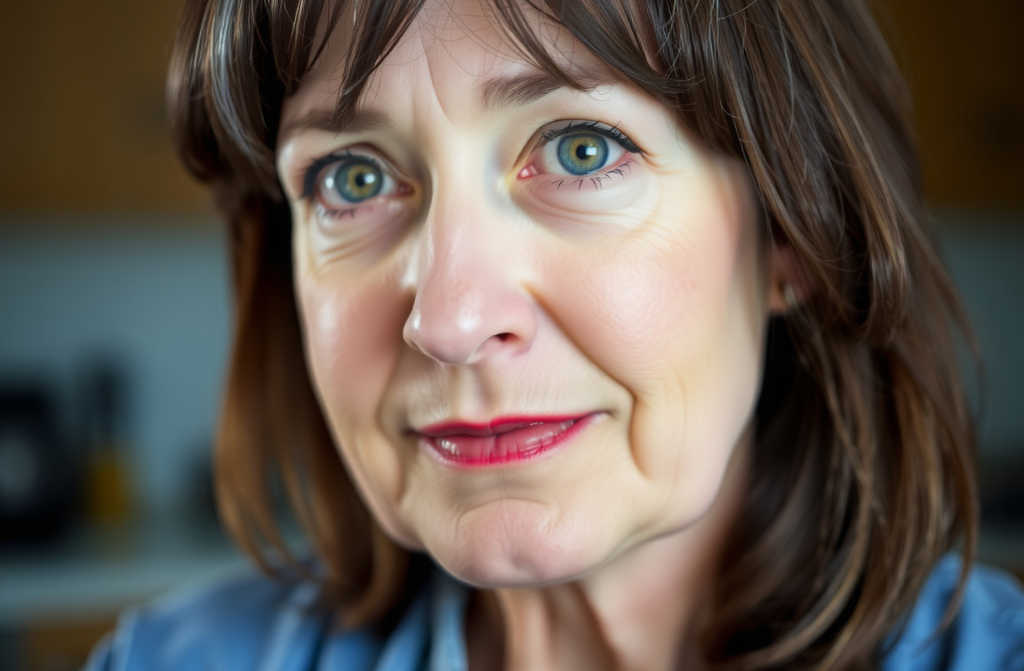
“The sea’s cancelled,” Leonard said, eyes glued to his phone. “Mum’s on her way.”
I stood in the bedroom, a half‑opened suitcase on the floor, a brand‑new swimsuit with its tag still on. My first in seven years.
“How can it be cancelled?” I placed the swimsuit carefully on the bed. “The tickets are bought—non‑refundable. Two‑hundred and eighty pounds, Leonard.”
He rubbed the bridge of his nose and slumped onto the sofa’s edge, the pose he always took when the conversation went where he didn’t want it to.
“What am I to do? She’s already got a train ticket for the day after tomorrow. I can’t just tell her to turn back.”
We had been married for seven years, and in all that time I’d never taken a holiday—not to the coast, not to a spa, not even a weekend in the next town. The first year we spent three days in Brighton for our honeymoon, then my mother‑in‑law, Margaret, called to say her blood pressure was high. We went back. Her reading was one‑thirty over eighty, perfectly normal for her age. I knew that, being a pharmacist, because I saw those numbers on prescriptions daily.
From then on every plan for a break was interrupted by Margaret’s call. Four times in seven years she popped up, as punctual as a clock.
“Leonard,” I sat beside him, trying to keep my voice even. “We’ve been saving for this holiday for four months. I’ve taken extra twelve‑hour shifts. You saw me coming in every night.”
“I see,” he replied, still staring at his screen. “But Mum’s more important.”
I adjusted my glasses. My fingertips slipped; my hands were raw, cracked from countless antiseptic wipes. Eight years behind the pharmacy counter left my skin feeling like sandpaper.
“What’s more important?” I asked.
“The sea, Blythe,” he finally looked up. “Mum’s seventy‑four. Don’t you understand?”
I understood. Margaret lived in a three‑bed flat in York with a neighbour who visited daily. She did the market herself, carried her own bags, canned twenty jars of preserves every winter. And every time she “came over” it began with the same call to Leonard: “Love, I’m missing you, I’ll be staying a week.”
That “week” stretched to two, then three. Once she stayed a whole month because the neighbour rang to say the flat’s pipe had burst.
“I won’t cancel,” I said. “You go meet Mum. I’ll fly away.”
Leonard lifted his head, as if I’d suggested something scandalous.
“Where will you fly? Alone? Without me?”
“With Emily.”
“No,” he stood abruptly. “No, Blythe. We’re a family. Either together or not at all.”
I yielded, as I had four times before. I slipped the swimsuit back into the suitcase, closed it and tucked it onto the high shelf. Two‑hundred and eighty pounds vanished, irretrievable.
Two days later Margaret stood in the hall, a heavy checked bag and a sack of home‑grown cucumbers in hand.
“Show me what you’ve got,” she said, scanning the corridor. “The wallpaper could use changing. Leonard, are you even looking after the flat with your wife?”
Margaret stayed with us for three weeks. In the first two days she rearranged everything in the kitchen—pots in a different cupboard, spices on another shelf, boards under the sink “because it’s more hygienic.” I worked twelve‑hour shifts and returned to a flat where I could never find what I needed.
“Margaret,” I said on the third day, opening a cupboard in search of a frying pan. “I’m used to things being in a certain order. It helps me.”
She looked over her glasses, her gaze heavy from top to bottom, though I was a head taller.
“You, Blythe, are used to chaos. This isn’t order, it’s disorder. Who puts a pan next to the rice?”
“It’s convenient for me,” I replied.
“It isn’t for me. Nor for Leonard. Right, Leonard?”
Leonard sat at the table, phone in hand, shoulders hunched as they always did when Mum spoke.
“Mum,” he said. “Alright then.”
“All right” was all I heard. Not “Blythe is right” nor “Mum, that’s her kitchen.” Just “All right.”
On the fifth day Margaret tackled the curtains. I had bought linen, mustard‑coloured panels the previous year, matching the armchair and cushions—£80. I came home to find them folded on the chair, white voile drapes that Margaret had brought from elsewhere hanging in the windows.
“What’s this?” I asked.
“Real curtains,” she tapped the table with a finger. “Not rags. Mustard is a hospital colour, not a home colour.”
I fell silent for three seconds, then stripped the voile, folded it on a stool, fetched my own curtains and began to hang them. My hands did not shake this time.
“What are you doing?” Margaret’s voice lowered.
“Hanging my curtains,” I said without turning. “I like my curtains. This is my house. I choose the colour.”
Silence stretched for about five seconds before Margaret rose from the table and left the room. I heard her dial a number in the hallway. The voice was muffled, but I could make out: “Leonard, your wife is being rude to me. I’m not used to being spoken to like that.”
Leonard returned from work earlier than usual. The door slammed, startling Emily in her bedroom.
“What have you done?” he asked, stepping over the threshold.
“I hung my curtains.”
“Mum’s upset! She brought us those things, she tried, and you didn’t even thank her!”
I looked at his broad shoulders, which at that moment were straightened because Mum was not in the room but behind the wall. With her she hunched, with me he straightened.
“Leonard,” I said, “I thanked her for the cucumbers, the jam, the pies. But I will choose the curtains in my home.”
“That’s OUR home!” he snapped.
“Then why does your mother make the decisions?”
He said nothing, rubbed his nose, turned and walked toward Mum.
That evening Emily slipped into the kitchen, book in hand, as if she’d come for a glass of water.
“Mum,” she whispered, “he calls her every time before a holiday. I’ve heard it.”
“What did you hear?”
“He says, ‘Mum, we’re leaving on such‑and‑such date,’ and she shows up. Every time.”
I set the kettle on the stove, listening to the water boil. It wasn’t coincidence. Four consecutive years of the same pattern was a system.
Emily shifted her weight from foot to foot.
“Mum, are you okay?”
“Yes,” I said. “Go do your homework.”
I wasn’t okay. I pulled out my phone, opened a notes app and tallied the sums. First honeymoon in Brighton, three‑person package, £120. Second trip to Spain, two years ago, £190. Third to the Lake District, last spring, tickets and hotel £50. Fourth – the cancelled beach holiday, £2,660. Total £6,420, all lost.
Leonard had taken Mum to a spa in the Cotswolds twice, using the joint funds each time.
I closed the notes, put the phone away and poured a cup of tea. My hands were steady. The decision wasn’t final, but something had shifted inside me.
A month after Margaret left, I invited my friend Claire over for dinner. Claire worked with me at the pharmacy; we’d known each other nine years.
Leonard went to a mate’s house to watch football. Emily stayed in her room. Claire and I opened a bottle of wine, sliced some cheese and settled at the kitchen table – the first proper evening together in ages.
“How are you?” Claire asked. “Any plans this summer?”
“Nothing,” I replied with a smile, weary of the question.
“Again?”
“Again.”
Claire shook her head; we all knew what that meant.
Just then the doorbell rang. I opened it to find Margaret on the doorstep, her checked bag and a sack of cucumbers in hand.
“Leonard said you’re home alone,” she said. “Thought I’d drop by. It’s been a month since we saw each other.”
A month – that’s what she called “a long time.”
She entered, saw Claire, and took a seat at the table. I poured her tea, for Margaret never touched wine and always disapproved of it.
Ten minutes of polite conversation passed, then Claire asked, “Margaret, do you travel much?”
Margaret sat up straight.
“Oh, yes! Leonard drove me to the Cotswolds twice – hot baths, massages, mountains. Lovely!”
She turned to me.
“And you, Blythe, where have you been lately? I haven’t seen a single photo of you anywhere.”
I adjusted my glasses.
“No, nowhere.”
“She’s young, healthy, and never goes anywhere. Leonard invites her, she refuses. She’s to blame. In my day I’d toured all of Kent.”
Claire’s lips tightened.
“Margaret, Blythe isn’t staying away because she doesn’t want to.”
“Then why?”
Claire fell silent, looking at me for permission to ask more.
I answered myself.
“Because every time we buy tickets, you show up,” I said, voice even. “Four times in seven years. Honeymoon – you called, we returned. Spain – you arrived a day before departure. Lake District – same. This year – the sea. Two‑hundred and sixty‑pound tickets, non‑refundable. Total six‑thousand four‑hundred pounds lost. I’ve counted them all.”
Margaret stopped tapping the table, her hand frozen mid‑air.
“What are you talking about?”
“I’m stating facts,” I replied. “No accusations, just numbers. I can give dates if you need them.”
Silence.
Claire rose, saying she had to go. I saw her out the door. When I returned to the kitchen, Margaret was already dialing Leonard.
Twenty minutes later he barged into the flat, shoes still on.
“Why are you embarrassing Mum in front of strangers?” he demanded.
“I didn’t embarrass anyone. I just mentioned the sums.”
“What sums? What are you on about?”
“The six‑thousand‑four‑hundred pounds we’ve lost on cancelled trips over our marriage.”
Leonard stared at his mother. Margaret stood in the doorway, arms crossed.
“Love,” she said, “either I or this.”
“Mum,” Leonard rubbed his nose.
“She should apologise,” Margaret cut in.
Leonard turned to me.
“Blythe, apologise to your mother.”
I took off my glasses, wiped them on the inside of my sweater. Without them everything was a little blurry – Leonard, his mother, the hallway with its scuffed shoes.
“No,” I said. “I won’t.”
“Then I’m off to Mum’s,” he declared. “Until you come to your senses.”
“Fine,” I replied.
He waited for a different answer; I could see the twitch of his chin. But I stayed silent, and he did the same. He grabbed his coat and left. Margaret followed, leaving the cucumber sack in the hall.
I sat on a stool in the empty kitchen. My legs ached after the shift; twelve hours at the counter, then this. Inside, however, clarity settled like a calm after a storm.
He returned three days later, without apology, without conversation, just hanging his coat and sitting down to dinner. Margaret went back to York.
A week later Leonard started speaking in clipped phrases: “Dinner ready?”, “Where’s my shirt?”, “Pick up Emily.” I realised he was punishing me with silence for not apologising.
That same week I began setting aside money in a separate account, hidden from him.
A year passed quickly. Emily turned sixteen, and I arranged her passport myself. Leonard signed the consent without a word, indifferent as long as Mum wasn’t on the line.
In May I bought tickets for myself and Emily to a three‑star hotel in Cornwall, nine nights, paying from my secret stash. I had saved £37 each month from my salary. The tickets were refundable this time – I had learned from experience.
I told Leonard, “Let’s all go together in June. I’ve found a good deal.”
He looked at me as if I’d spoken a foreign language, then nodded.
“Alright, we’ll try.”
Two weeks of packing followed. I bought Emily new sandals and a straw hat; for myself, a sunscreen cream discounted for pharmacy staff.
Four days before departure Leonard came home later than usual, sat at the table, phone face down. I recognized the gesture – he was on the phone with Mum, or she was on him.
“Blythe,” he began.
My fingers clenched, nails digging into my palms, not from anger but from anticipation. I knew what he would say.
“Mum’s coming. We need to meet her.”
“When?” I asked, already knowing.
“The day after tomorrow.”
The day after tomorrow. Two days before we were to fly.
“Leonard,” I asked, “Did you call her?”
“What?”
“You called her and told her we’re leaving?”
He averted his eyes, rubbed his nose, and I understood – yes. He’d called, as he had four times before, gave the date, the route, and Margaret immediately booked a train ticket, as if on a clock.
“She misses us,” Leonard said. “She’s seventy‑five this year.”
“She’s seventy‑four,” I corrected. “She’ll be seventy‑five in November.”
He waved a hand.
“What’s the difference? Mum’s one. We’re the only ones she has. The sea isn’t going anywhere.”
And then the memory flooded back: seven years of “the sea isn’t going anywhere,” each tagged swimsuit, each suitcase opened and closed, six‑thousand‑four‑hundred pounds burned, twelve‑hour shifts leaving my hands raw.
“Fine,” I said.
Leonard exhaled, relaxed, as if I’d surrendered again.
“Good girl,” he muttered. “I’ll call Mum and ask her to take the spare bedding – we don’t have much left.”
I nodded, left the kitchen and entered Emily’s room.
“Get ready,” I told her. “We fly the day after tomorrow.”
Emily looked up from her phone.
“He said—”
“I know what he said. Pack the suitcase. Swimsuit, books, charger. I have the passports.”
Emily stared for a moment, then smiled – the first smile in weeks – and fetched her backpack.
I returned to the kitchen. Leonard was still at the table, phone to his ear, discussing with Margaret which set of sheets to bring.
“Leonard,” I said, “I’m not cancelling the tickets.”
He lifted his head.
“What do you mean?”
“Literally. I’m flying with Emily. You stay and meet Mum.”
The line went dead. Margaret, on the other end, must have gone quiet too.
“You’re serious?” he asked.
“For seven years I’ve not had a break. Four times we lost money. I work six days a week, twelve‑hour shifts; my hands are cracked from the antiseptic. I’m forty‑eight. I want to see the sea.”
“And Mum? What will you tell her?”
“Tell her your wife has gone on a holiday – the first in seven years.”
He stood, the chair squeaking.
“Blythe, if you go, that’s—” he stammered. “It’s disrespectful to my mother. To me.”
“And four cancelled holidays is respect to me?”
He said nothing, phone clenched in his hand. Margaret’s voice crackled from the speaker: “Leonard! What’s happening? What is she saying?”
I turned and left the kitchen.
That night I lay awake in Emily’s room, checking documents: my passport, Emily’s, the hotel reservation, insurance, transfer details – everything paid.
In the morning I left a short note on the kitchen table, beside his mug:
“Leonard, Emily and I have flown. We’ll be back in ten days. We need this holiday. Blythe”
I lifted two suitcases, woke Emily, and called a taxi.
At the doorway I looked back. The flat was silent; Leonard slept.
“Let’s go,” I said to Emily.
In the taxi Emily was quiet for five minutes, then asked, “Mum, will he be angry?”
“He will,” I answered.
“And what then?”
I stared out at the grey city passing by. In four hours I would see the sea for the first time in seven years.
“Nothing,” I said.
At the airport I turned my phone off. I switched it on once we were airborne, as twelve missed calls from Leonard lit the screen, three messages fromAs the plane rose above the rolling coastline, I finally tasted the freedom I had long denied myself, and the sea seemed to whisper that at last I had kept my promise to the tide.