
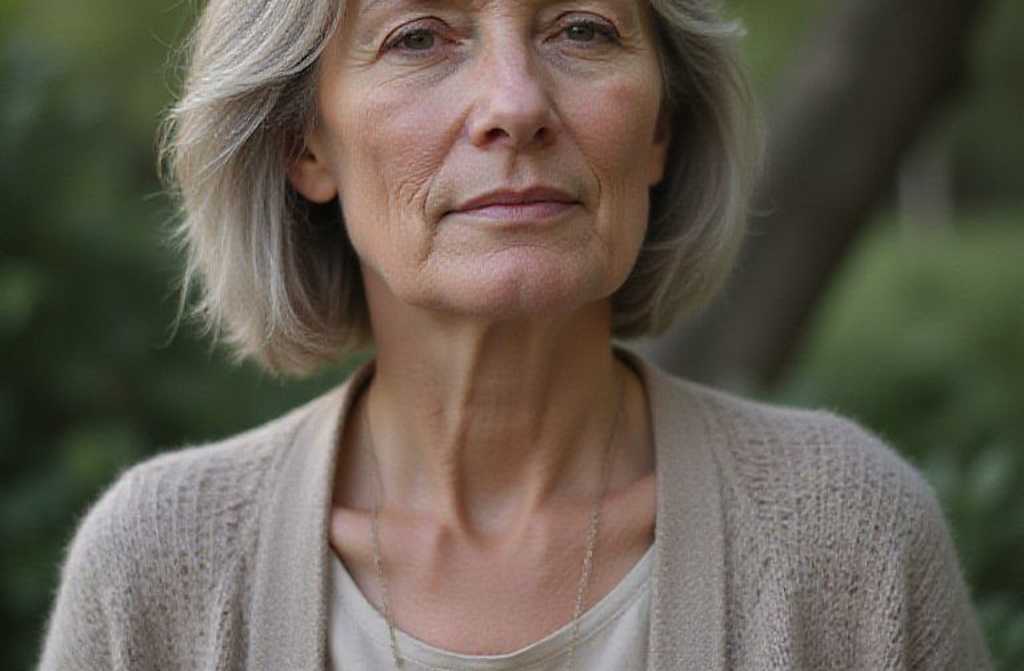
Dennis, who are they? Where did all these people come from? Christine’s voice trembled as she gripped her son’s elbow tighter. A thought raced through her mind: *He sold it. Sold the cottage without asking, and these are the new owners come to take over.* The idea dried her mouth, and releasing his arm, she stood frozen, staring into her own garden.
The boards smelled of pine. They smelled so thick and sharp that Christine’s nose had started itching as she approached the gate, and now that smell mixed with lime and sweat. People stood in the garden. Many. Twenty or more. Men in old T-shirts and dusty jeans, two young women with rolls of film, a lad on a ladder, another straight on the roof with a hammer. Someone dragged bags of cement, someone stirred white slop in a bucket that gave off a sharp lime odour. Her quiet, gloomy cottage garden of yesterday now looked like an anthill in April.
“Dennis,” she said dryly, almost voicelessly. “Do you see this? If you sold the cottage without asking, I’ll never forgive you. Tell me honestly, are these strangers?”
“Mum, hold on — what new owners?” Dennis was taken aback. “What do you mean? They’re mine. All mine.”
“What do you mean ‘yours’? What’s going on? I have my phone in my bag. If you don’t explain right now, I’m calling the local constable.”
She actually reached for the bag hanging on her arm. Her fingers wouldn’t obey. Everything flashed through her head at once: the cottage she had worked on for fifteen years, the veranda she’d never built because first there was Dennis’s education, then the car loan, then her own dentures — they could wait, then the linoleum in the city flat — that could wait too. Everything waited, and now strangers were trampling her garden. Hers. Which she had nurtured like a child.
“Mum,” Dennis touched her shoulder. “Listen. They’re not owners. I invited them.”
Christine froze, bag half-raised. She looked at her son as if seeing him for the first time. Thirty-five, grey already showing at the temples, broad shoulders — took after her, not his father. In his eyes, neither fear nor cheekiness. Just a quiet, calm expectation.
“You?”
“Me. Mum, they’re all mine. From work, from university days, the lads from the street I played football with. Remember Paul?”
Christine remembered Paul. Skinny, always hungry, always stayed for dinner because things at home weren’t great, it seemed. She used to give him double portions and pretend not to notice how embarrassed he was.
“Paul’s here?”
“Here. And Alex, and Mike, and George who was my best man at the wedding. Almost everyone you ever fed, Mum.”
Christine’s eyes swept the garden. So that was it. That’s why the faces seemed vaguely familiar. The one on the ladder — definitely the boy she had given Dennis’s old bike to when his family moved into a council flat. And this one with the bucket — Alex, who broke their window with a football in Year Nine, and she didn’t shout, just asked him to put in a new one. They had grown up. Become grown men with strong hands and serious faces. And they stood on her land with planks and seedlings.
“Why?” Christine asked quietly. “Dennis, why?”
Dennis paused. Then he took her hand — carefully, as if it were glass — and turned her to face him.
“You’ve been saving for this cottage your whole life, Mum. Remember you wanted a veranda? A big one, with sliding glass doors, so you could drink tea in summer and watch the sunset? You had a picture from a magazine on the fridge. Fifteen years ago.”
Christine remembered. Yes, there was a picture. It had yellowed, the corners curled, but she didn’t throw it away until they replaced the fridge. Then the clipping got lost, and she had almost forgotten. Almost.
“You used to save,” Dennis continued, “from every paycheck. But then came my exams, and tutors, and the rented flat when Emma and I first got married… Mum, you’ve put off fixing your own bedroom for six years. You still have that floral wallpaper that’s probably older than me. I remember you saying, ‘It’s fine, the veranda can wait.’ You know what? It can’t. No more waiting.”
Christine was silent. So silent that Paul stopped hammering on the roof and stood still, watching them.
“I’m paying you back,” Dennis said. “Free team. We decided — we’ll finish in a week. Look at the plan.”
He pulled a folded sheet of paper from his back pocket. Unfolded it. Christine saw a drawing — neat, with measurements, with notes in the margins. Not a magazine clipping. A real plan. Made for her small garden, taking into account the old apple tree she had asked them not to touch under any circumstances.
“We’ll go around the apple tree,” Dennis said, catching her look. “We’ve thought of everything. We’ll reinforce the foundation. We’ll put in underfloor heating — I checked, there’s a special system, affordable and reliable. You can sit out there in November, wrapped in a blanket, drinking tea.”
The first tear rolled down Christine’s cheek and stopped near the corner of her mouth. She didn’t wipe it — didn’t even notice. She stood and looked at these grown men who once played football in their yard, scraped their knees, grabbed still-hot meatballs from her pan, copied each other’s homework in her kitchen, and argued themselves hoarse about computer games. Now they had come here. On their own. For free. To build the veranda of her dreams.
But the idyll didn’t last. Beyond the fence came a cough, and a head in a floral headscarf appeared above the pickets. Vera, the neighbour from the left. A woman with a perpetual expression of “I told you so.” She planted her hands on her hips and watched the proceedings as if the national border were being dismantled before her eyes.
“Christine, is that you?” she sang out in a sugary voice with a clear metallic edge. “I was looking — noise, commotion, vans since morning. What’s this, a job fair?”
“Vera, good morning,” Christine mechanically wiped her cheek. “It’s my son and his friends. Helping out. We’re building a veranda.”
“A veranda?” Vera threw up her hands. “Do you have permission? Do you know what fines they levy nowadays for unauthorised structures? You’ll sell the cottage and still owe money. And your plot is tiny, Christine — only three metres from my fence. Are you observing the setbacks? I won’t keep quiet, you know. My nephew works in building control; I can tip him off.”
Dennis overheard, turned, and walked calmly to the fence.
“Good morning, Vera. We do have permission. The plan is approved. All fire regulations are met. My friend is an architect — he checked everything before drawing it up. Would you like to see the documents?”
Vera turned purple. She clearly hadn’t expected that.
“Well, well,” she drawled, stepping back. “We’ll see what you end up with. You know, sometimes they build, and then they have to tear it down at their own expense. And the noise, Christine. My grandchildren won’t be able to sleep.”
“That’s fine,” Christine said quietly, and her voice suddenly stopped trembling. “Your grandchildren ate my pancakes last August when you forgot to feed them. They can sleep a bit later.”
Vera pursed her lips and disappeared behind the fence. Paul, who had been watching from the roof all this time, let out a soft chuckle and went back to hammering. And Christine suddenly felt something she hadn’t felt for years — something like a fighting spirit. No. She’d protect her dream now.
The next two hours Christine spent in a strange, translucent state. It felt like she was dreaming. Dennis settled her on a folding chair in the shade of the apple tree, brought from the house an old mug with a chipped handle — the very one she’d used when she took him to nursery — and poured her hot tea from a thermos.
“Sit,” he said sternly. “Your job today is to watch. No ‘I’ll just sweep here,’ no ‘I’ll water the cucumbers now.’ Got it?”
Christine wanted to argue — out of habit, because she’d been arguing continuously for the last forty years — but suddenly changed her mind. She leaned back in the chair and started watching.
Watching Paul and his mate sawing planks, the saw screeching so loud the neighbour’s dog started barking. Watching Mike — who was no longer red-haired but bald and distinguished — mixing mortar and explaining something to one of the girls with seedlings. Watching Dennis go from one to another, checking something, helping someone hold a beam, nodding to someone else, his face grown-up, focused, in charge. Her son. Master of this garden. No — master of the life he was now giving back to her, his mother.
By about three in the afternoon, Christine got up anyway. Enough. Watching was one thing, but this was too much.
“I’ll make lunch,” she told Dennis.
“Mum…”
“Don’t ‘Mum.’ There are twenty people here; they’ve been on their feet since eight. What have they eaten? Sandwiches?”
“Well, we have bread and sausage…”
“Exactly. I’ll be quick.”
She went into the house. Inside it was cool and smelled of summer dust. She opened the fridge, which always looked sadly empty at the start of the season — eggs, butter, a carton of milk, three-year-old mustard — and sighed. Never mind. She’d have to improvise.
But when she stepped onto the porch to call Dennis and send him to the shop, she found she was already expected. One of the girls — the one with the phlox — handed her two enormous bags.
“There are vegetables, chicken, eggs, flour, oil,” she said. “Dennis bought everything yesterday. He said, ‘Mum will want to cook, don’t argue, just give her the ingredients.’”
Christine took the bags. Looked at the girl. Then at Dennis, who stood a little way off pretending to study the rafter brackets.
“You,” she said to his back. “When did you manage all this?”
“Mum, I’ve been preparing for three months,” her son replied without turning. “Just tell me when the pancakes will be ready.”
That was too much. Christine went inside, closed the door firmly, and stood for a minute with her hands pressed over her face. Then she exhaled, rolled up her sleeves, and started on the batter.
An hour later, a long table stood in the garden — the lads had knocked it together from the same planks in just fifteen minutes. On the table steamed the potatoes Christine had cooked in three frying pans in turn because there wasn’t a big pot in the cottage. There were cucumbers and tomatoes, coarsely chopped, just like in her youth when salads weren’t fussed over. In the centre rose a mountain of pancakes — thin, lacy, with crispy edges. The ones. Her signature. The ones that used to disappear in minutes before hungry tenth-graders.
“Aunt Christine,” someone said with a full mouth — it sounded like Alex, the one who broke the window. “I haven’t eaten pancakes like this in fifteen years. Honestly. My mum never baked, it was always ready meals.”
“I know,” Christine said, and suddenly smiled. “That’s why you used to stay until evening.”
Everyone laughed. Loud, free, young. Twenty adults were laughing in her garden, and it was probably the best sound in the last ten years.
Christine suddenly stood up. She looked around at everyone. Paul froze with a spoon in his hand; Dennis tensed. She took a ladle, poured some cordial from the pot into a mug, and raised it.
“Folks,” she said, her voice unusually loud. “Forgive me, but I’ve cried three times today. First from fright. Second from joy. Third because I didn’t know how to thank you. Now I know. I want to drink to all of you. To each one. For remembering. I never forgot your faces, but I thought you’d forgotten mine. But you didn’t. So I didn’t feed you in vain. To you.”
She downed the cordial in one gulp as if it were something stronger. A second of silence at the table, and then such a cheer erupted that a crow flew off from the neighbour’s apple tree.
She moved among them, adding pancakes, pouring tea, listening to the conversations, and realised that the anxiety was gone. That familiar one she’d gone to sleep and woken up with for the past few years. Anxiety for Dennis, for his marriage, for the mortgage, for him not earning enough, working too much, calling too rarely. All of it had receded. Because here he was, her son, sitting on an upturned crate, using a plank on his lap as a plate, spreading jam on a pancake, and telling someone, “No, the windows are tomorrow — today we need to finish the gable or the rain will soak everything.” And she understood: he had grown up. He could organise twenty people and build a veranda. And he had done it — for her.
In the evening, when the group began to disperse to tents — they’d set up camp just beyond the plot, by the woods, to avoid crowding — Christine sat on the old porch steps. Dennis sat down beside her.
“So, how do you like it?” he asked.
“I don’t know how to thank you.”
“Mum, what are you saying? Thank me? I’m the one thanking you. For everything.”
They were silent for a while. Then Christine said, “You know, I always thought parents give to children, and children go off into their own lives and that’s it. Well, that’s how it is for everyone. I wasn’t expecting anything. Honestly, Dennis. I just wanted you to have a better life than mine.”
“And I do,” he said. “I have a better life precisely because you wanted that. And now I want you to have a better life too. At least a veranda.”
Christine chuckled and nudged him with her shoulder — just like when he was a kid, bringing home a D in literature and saying, “Mum, I’m not Shakespeare.”
“Alright, builder. Tomorrow you’ve got those gables again.”
“The gables aren’t going anywhere,” Dennis said, and offered his hand to help her up.
The week flew by like a single day. On Friday evening, Christine stood on her new veranda and watched the sunset flood the garden with orange light. The veranda was exactly like in that clipping: bright, spacious, with sliding glass doors and the fresh smell of wood. The boards weren’t painted yet, but that didn’t matter. There was time. An old blanket already lay on the floor, and a mug of tea sat on the windowsill. The lavender the girls had planted by the entrance smelled delicate and poignant, like a promise of the future.
Tomorrow everyone would leave. But today they were sitting at the table again, laughing, drinking tea, eating pancakes. And Christine caught herself thinking: more than anything, she wished that each of these twenty people — Paul, who was getting divorced; Mike, who was going bald; the girls with the seedlings whose names she still didn’t remember — that all of them would have a moment like this one day. A moment when they’d realise that kindness comes back. Not necessarily as pancakes. Maybe as planks. Maybe as a veranda. Or maybe just as twenty people standing behind you without a contract and saying, “We remember how you fed us.”
In October, when the first frosts came, Christine sat on her new veranda with a blanket on her knees. Beyond the sliding glass doors, the wind bent the bare branches, but inside it was warm — the underfloor heating worked perfectly, and the tea in her mug stayed hot. She took her phone, photographed the sunset over the apple tree, and wrote to Dennis: “Son, a flock of bullfinches came. Come over. Pancakes will be ready.” The message sent, and she leaned back in the chair and smiled — slowly, calmly, like someone who had finally stopped waiting.