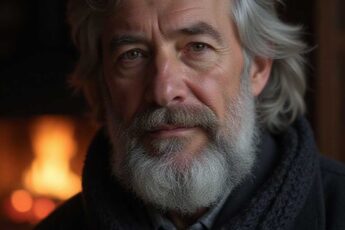

7July.It feels impossible, like a cruel joke of fate. I keep staring at that portrait of the mayor, halfexpecting some familiar glint in his eyes.
Today, in the HR office of the town council, I signed the paperwork for a new clerk and then called out:
Eleanor, could you pop into my office? Your new colleague is waiting.
She arrived a few minutes later, a woman in her fifties, and I greeted her straightaway:
Are you the new cleaner?
Yes, she answered.
Im the head of housekeepingEmma Anderson, I introduced myself. And you are?
She hesitated, then corrected herself, EEleanor James. I led her down the corridor, chatting as we went. Your workroom will be on the third floor, over there.
***
Eleanor seemed delighted with her appointment. She beamed as she surveyed the modest office, murmuring to herself:
Two years left before I retire, but I could keep on after that. The pay is £8000 a year plus occasional bonuses. David and I will manage fine. The kids are grown and have moved on. I cant even recall the mayors full namehow embarrassing if anyone asks! Lunch is soon; theres a photograph of every mayor on the ground floor. How did I miss that?
On her way back from the staff canteen she passed the display board and read the mayors details:
Andrew Borris born 1983.
A thought flitted through Eleanors mind: Hes barely forty. And 7July, 1983? That cant be right
She turned back, read the date again, and the words on the plaque seemed to echo in her head:
7July! This cant be just a coincidence. And the name Andrewdifferent middle name, different surname. Its as if an adoption could change anything, even the name itself
She lingered on the portrait, hoping for a hint of familiarity.
***
The new job settled into the background of my thoughts. That evening I talked at length with David, then he retired to his room to watch the footie while I turned to my own television. Our threebedroom flat feels empty now that the children have moved out; the space is too quiet. David and I still share a bed occasionally, but less and less.
Lying in my own room, my mind drifted back to my youth and to a secret I never told David.
I had a son once, named Andrew. I was nineteen, penniless, with no steady work, living in a cramped dormitory after leaving college. I could only keep him for six months before I placed him in a childrens home.
Three years later I married David. We never spoke of the years before our wedding. Soon we had two daughters. The elder went to university in Bristol and got married there; she now has grandchildren in school. The younger married and lives in London.
I never secured a professional qualification. For the past twenty years I worked as a caretaker in a factory workshop, until the plant went bust and everyone was made redundant. Then a friends daughter offered me a cleaning job at the council. I accepted.
Now the mayor, Andrew Borris, was born in 1983. I dont complain about my life, yet those years keep pulling me back to the son I once had. He appears in my dreams now and then. I just want to be sure hes really my boy and that hes doing well.
***
A few days later, while sweeping the third floor, I heard voices and turned to see Mayor Andrew Borris chatting animatedly with a colleague. He glanced at me, nodded, and walked past without stopping.
In that instant, the face of Victormy first love from forty years agoflashed before my eyes. He had been handsome and carefree back then; I always imagined him as a serious, businesslike man. Seeing the mayor made me realise that the image I once held of Victor was exactly the one Id projected onto Andrew.
Victor had left when I learned I was pregnant, saying hed gone abroad for work. I waited, hoped, then finally understood he had simply run away.
Could Andrew Borris be my son? I whispered to the empty hallway. If I hadnt given him up, perhaps his life would be different. Yet my daughters are thrivingmarried, with spacious homes and cars. My son hes missing.
What if I hadnt married David? My life, his, and Andrews would have unfolded entirely differently. Perhaps Andrew isnt my son after all; perhaps the world is full of uncanny coincidences.
It hardly matters now. He has parents who cared for him from infancy, even if they never told him the truth about his birth. His childhood, by all accounts, was happy. Its rare for an ordinary lad to rise to the mayoralty.
***
After lunch, my younger colleague, Olivia, approached me.
Hi, Aunt Ethel!
Hello, I replied.
Were celebrating Lucys birthday on Fridayshe works on the sixth floor. Shell be turning fortyfive. Are you joining us?
Of course! I smiled.
Great, thatll be £20 for the cake and a little something special.
I fished a twentypound note from my wallet and handed it over.
Just call me Ethel, dear. Were all colleagues here, Olivia said.
On Friday we met after work on the seventh floor. One vacant office became our makeshift banquet room. We set the table, raised glasses of red wine, and began the usual round of toasts.
The door opened and Mayor Andrew Borris stepped in, clutching a small wrapped box.
Lucy Ogle, happy birthday! he declared, handing her the gift. Tears welled in her eyes.
Mayor Borris, please have a seat with us, I invited, extending a chair.
He lingered only briefly, then sat beside me. I ladled salad onto a clean plate, added slices of ham, poured wine, and listened as he offered a toast. As I watched him, a shiver ran through methere was no longer any doubt. This was my son.
He stayed for about twenty minutes, then said his goodbyes and left.
Look at that man, remarked Kate, the longestserving employee, her voice low. Even the former mayor stopped by to sit with us.
Has Andrew been here long? I asked.
About a year. Remember we elected him last year? Kate replied.
I could not recall; David had usually made the decisions for me.
You know his parents are wealthy, right? Kate continued. But they arent his biological parents.
What? Is that true? Lucy asked, surprised.
It came out two years ago when he was preparing for the election. Apparently he never knew. He didnt react at all, Kate said.
How do you know all this? I pressed.
The former deputy mayor, Olga Patel, kept tabs on Andrews background, trying to ensure her own candidate stayed in power. When the old mayor lost, the story surfaced, Kate explained.
Does he even know who his real parents are? I asked, halfhopeful, halffearful.
It seems not. He loves the people who raised him. By all accounts, hes an upright man, Kate said.
I stared at the closed office door where Andrew had just been seated, feeling a mingling of joy and sorrow. Joy that my son was thriving, sorrow that I could never hold him in my arms. I was, after all, the one whod sent him away.
A soft smile spread across my face as I whispered to the empty room:
I wont trouble you, my boy. Ill always be near, in spirit.The soft knock on the door startled me, and I turned before the hallway could swallow the sound. A man I had watched from a distance for months entered, his eyes steady, his hands cradling a thin envelope.
Ethel, he said, his voice low enough that only the two of us could hear, I found something in the archives that belongs to you.
He slipped the envelope onto the desk and opened it with reverent fingers. Inside lay a faded photograph, the edges browned by time, and a stack of neatly typed sheets. The first page began, in a careful script I recognized from a decade ago, Dear Andrew, if you ever read this, know that
My breath caught. The words were not his, but his mothersmy own handwriting, trembling over a page I had never thought I would see again.
Your mother never stopped looking for you, Andrew continued, his eyes never leaving mine. She kept a box of letters in a drawer she never told anyone about. When the council moved files, the box was mistakenly sent to the new mayors office. I was the one who opened it.
Tears slipped down my cheeks, hot and unstoppable. All these years, I whispered, I thought Id lost you forever.
He stepped closer, the distance between us collapsing into a single, trembling breath. Ive spent my whole life wondering who raised me, why my name felt like a story I didnt write. I never imagined that the woman who cleans the corridors would be the one who held my heart.
We sat together at the small table, the envelope between us, and read the letters one by one. Each line was a piece of a puzzle I had spent a lifetime trying to finishplans I had made for a son I could not keep, a promise whispered in a night of fear, a lullaby I had once sung in a cramped dormitory.
When the last page ended with the simple sentence, I will always love you, my son, the room seemed to hold its breath. Andrew reached out, his hand trembling, and pressed his palm to mine. In that touch was an entire lifetime of missed birthdays, graduations, and quiet evenings.
The hallway lights flickered, casting a soft glow on the photographa younger version of me, hair pulled back, smiling beside a baby swaddled in a blue blanket. The boys eyes were bright, his cheeks round, the same shade of curiosity that now lit Andrews face.
Outside, the town councils clock chimed the hour, a reminder that time moves on, but it also marks the moments when past and present finally meet.
We stayed there long after the corridors emptied, sharing stories of the years we had lived apart, laughing at the absurdities that had kept us strangers for so long. When the night grew deep and the building settled into silence, Andrew stood, his coat in his hands.
Tomorrow, he said, Ill speak at the council about my own story. Ill tell them that the people who raise us shape us, but the blood that runs through us never forgets where it began.
He paused, looking at the photograph one last time. Id like to keep this, he said softly, so I can remember the woman who loved me enough to let me go, and the daughter who never stopped loving him.
I nodded, feeling a peace I had not known in decades flood through me. The weight of years lifted, replaced by a simple, profound certainty: love, once given, never truly parts.
As he walked toward the exit, the hallway seemed brighter, the portrait of the mayor on the wall no longer a distant figure but a reminder of the tangled threads that had brought us together. I watched him disappear down the stairs, and in the quiet that followed, I whispered, not to him but to the empty space he left behind, We are finally home.
The evening settled over the council building, and I lingered for a moment longer, looking at the photograph once more. The smile on my younger self mirrored the one now on my face, both holding the same fierce, quiet love that had traveled across years and walls to find its place at last.